
volume 3 march, 2026
the DOLLhouse dispatch
🖤
overlap & echoes
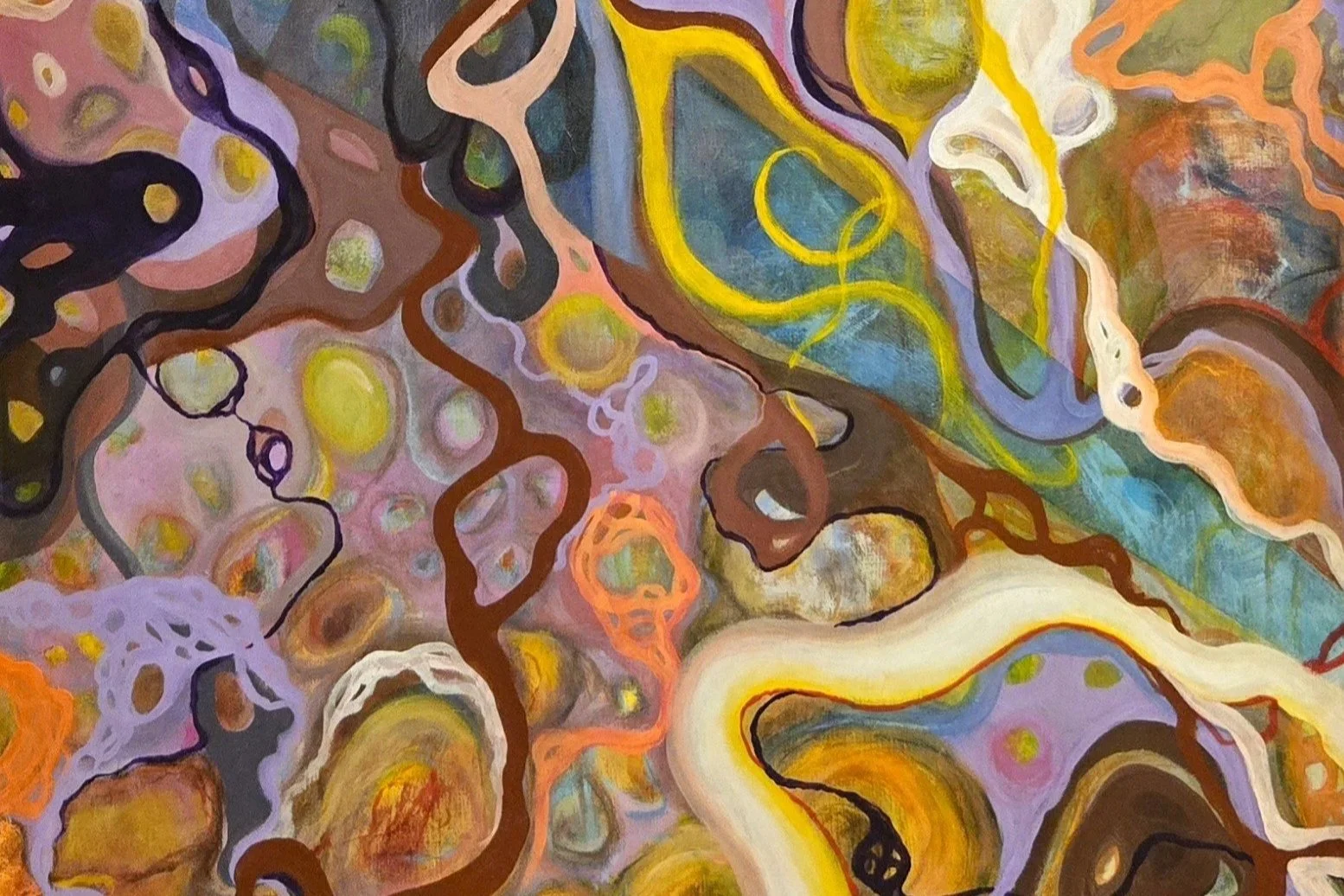
image: close up of lower portion
tumbled ravine, on loch (2025)
charcoal, acrylic, soft pastel, A1 on oil sketch paper
moment of musing
overlap
have I ever been a new year, new me kinda person?
I guess when there has been a need for it, however, I know that isn’t really how it works for me in an authentic way. Shapes & shifts arrive quietly… revealing themselves when they are good & ready!
right now, my art & making practices have felt layered; both physically & expressively.
when I reflected early this year; Scotland hadn’t quite let go.
even as our home-restoration project was demanding, (& though it’s a slow insistence), the volcanic honeycomb basalt formations sat beside moulded horsehair plaster ceilings. experiments with lace, paper clay & collage shared the space with unfinished canvases- all were taking their sweet time, too.
things aren’t mapping as sequential or linear. The overlap embodies, perhaps, an onion-like logic.
I devoted january to experimentation- allowing different ideas to coexist & remain somewhat unresolved before deciding to know what they mean, without forcing them into hierarchy.
in february, i craved immediate resolution & a sort of structured system of completion, alongside the discipline of patience.
thus, in volume 3 i have aimed to share & listen for the echoes; reverberating back.
the beginning, letting work sit, redirecting the urge for immediate resolve, & structural supports that emerged from considering an unrushed & layered process of making.
🖤
BRZA DOLL
studio senses
a layered approach
(or, my art is but an onion)
in following the theme of slow unfolding, & attempting patience through the unease of unresolve, i realised that i still require a certain- certainty.
if I can effectively counterbalance the tension of not-quite-known with the comfort of predictable repetition, then my threshold for discomfort can be prolonged- offset by the satisfaction of completion.
an unglamourous overlap, yet a practice I am unexpectedly proud of cultivating.
sometimes, the messaging in creative communities can feel polarising to me. the extremes can seem to be along the lines of an ongoing battle between:
the world is on fire and art is our only resistence
v.s
make things that you truly love as it’s the only way to nourish your soul
neither sentiment is inherently incorrect or untrue, but the uneasy in-between can be difficult to notice or pinpoint in the present. couple this awkward placement with what is often an entirely personal or interior experience, making the whole concept of overlapping practices & allowing echoes a chance to resonate a difficult experience to recognise, let alone characterise! particularly in a world where hype & attention are commodities, overlap & echoes are the in-betweens- they are rarely spectacular.
getting to the core
recently, I noticed in myself an increased tolerance for the unease that accompanies an unfinished work- without numbing, hiding or frantically pushing for clumsy or irresponsible resolve. I realised that previously I didn’t know how to step back from things unless they felt completely done.
now (at least some of the time) i do!
I don’t know that I can summarise my development any more neatly than to say- realising completion as the key measure of success had me in an incredibly unsexy chokehold, & noticing it when misalignment was costing me more than it benefitted.
a shift from compliance to self-containment.
self-containment - a case study
it’s only fair to offer some insight into a version of this process (that i can struggle to measure), and that’s where the slow-burn artwork tumbled ravine, on loch (2025) comes into focus. a case study, of sorts, for this process self-containment I’m more deliberately to in 2026.
context: this painting began in May 2025 with a restricted colour palette of mostly primaries, with willow charcoal and graphite under-drawing. a fairly classical starting point, and not my primary practice. i was certain this would be the final painting in my known-to-fantastical-unknown series
expectation vs reality: there were several days and iterations of underpaintings generated quickly across a week, and then. i just stopped. the painting was operating differently than I had expected. My belief in its humble beginnings were limited and I didn’t even take any progress photos to mark the ‘beginning’ point.
3 months = make or break: I can appreciate that this composition needed some time & space before fully committing, and clearly so did I! I travelled to the UK between June-August. During this time I didn’t see the painting (like i said- i didn’t even take an initial progress pic for reference)! It wasn’t until my arrival home that we (me & the painting) resumed our conversation, and time & distance became part of the work.
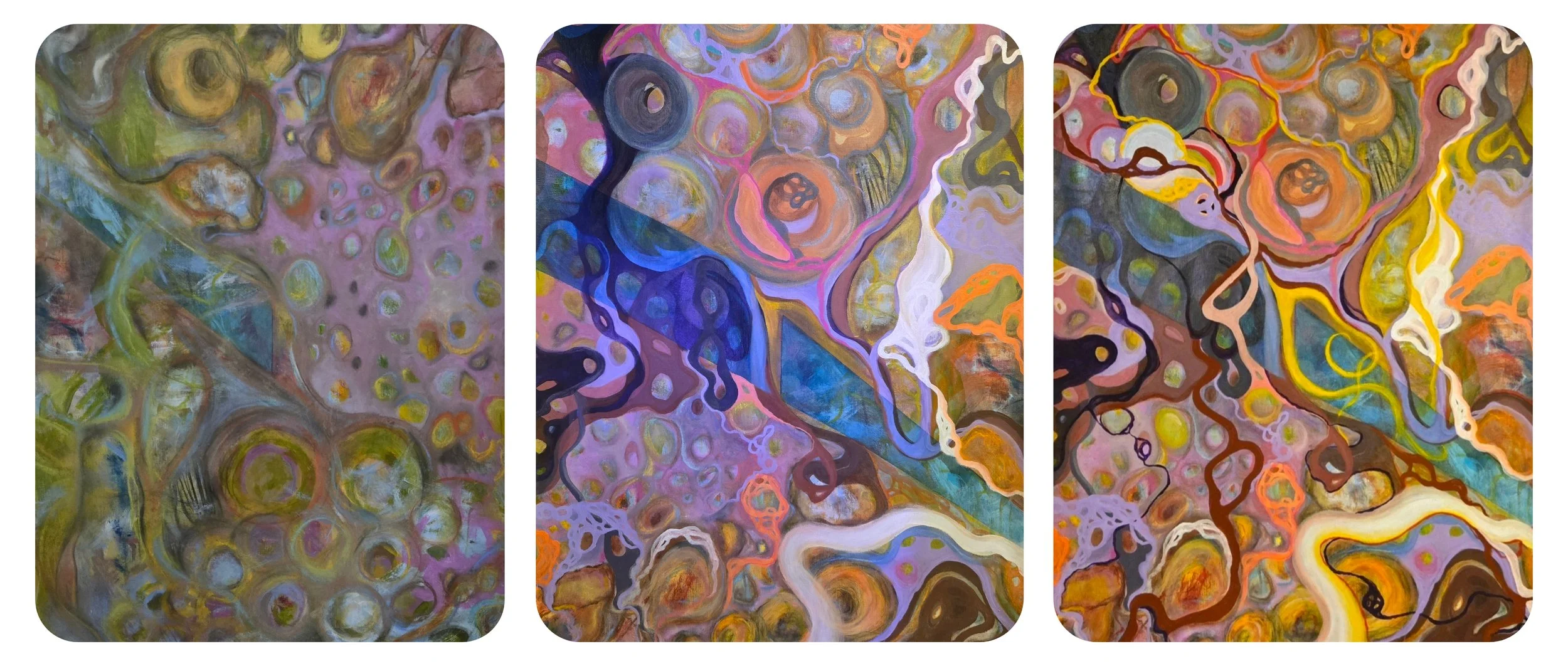
painting progress - tumbled ravine, on loch (2025)
L-R: may-august 2025, october 2025, november 2025
echoes: unexpectedly, the afterimage of Loch Lomond continued popping into my mind- the rainiest day of my entire trip where I got myself lost wandering lochside, alone. This daytrip is now (& forever) associated with the mixture of calm wonderment and underlying panic. This discomfort was strangely compelling, & lives contained within this painting (as well as the 2cm scar on my right shin).
a new read: I was honestly surprised by the lack of ‘rumination’ showing up in my thoughts as my painting gained focus and clarity. There was restraint that wasn’t avoidance, but more like a refusal to force completion. I didn’t fully realise that this painting was part of a wee jaunt until I was much closer to resolve than I would have previously tolerated. There is still the irksome feeling of unclosed loops; but I’m learning to read the discomfort as a signal that waiting in unease is necessary in the process of reaching creative closure.
access to the relief of completion
in focusing on unease, and keeping it contained, in allowing layers & echoes and embracing resonance; I realised that I cannot endlessly combat the need for completion.
there is no real cure for craving a clean, instant measures of success- like ticking off that ‘to do’ list, or finishing the race (unless, perhaps, you are more enlightened than me!)
what I did realise is that this base need didn’t have to be quashed, it just needed a clear place to go.
I detail re-directing this need for relief into a containment practice for the creative prompt of volume 3, so keep reading if you have been looking for creative ways to combat those completionist compulsions.
🖤
monthly creative prompt
5x5 creative completion
I usually have multiple paintings & projects in progress at any given time, so there is no shortage of places to divert energy, but it has been particularly useful & sometimes satisfying to work on a small, contained project- whilst allowing other larger, more conceptual works to marinate. Before landing on my 5x5 idea, I briefly considered popular online creative projects- monthly drawing-a-day prompts or daily miniature collages, but these tend to overwhelm me at a rate that outstrips any sense of success.
so, with that in mind I dug around for a small, unused sketchbook from my stash, and settled on a 12cm square with 80 pages. something that felt genuinely doable & suited to studio warm ups and/or evening wind-downs. A way to access the relief of finishing without sacrificing time spent sitting with unease & unresolve elsewhere.
5 pages, 5 ways came from re-directing this need for relief without overwhelm.
A simple set-up is all that is required: for each set of 5 pages I chose a single thing, then make that thing 5 different ways, and then, stop.
It gives a specific, low-stakes place to finish without demanding resolution everywhere else.
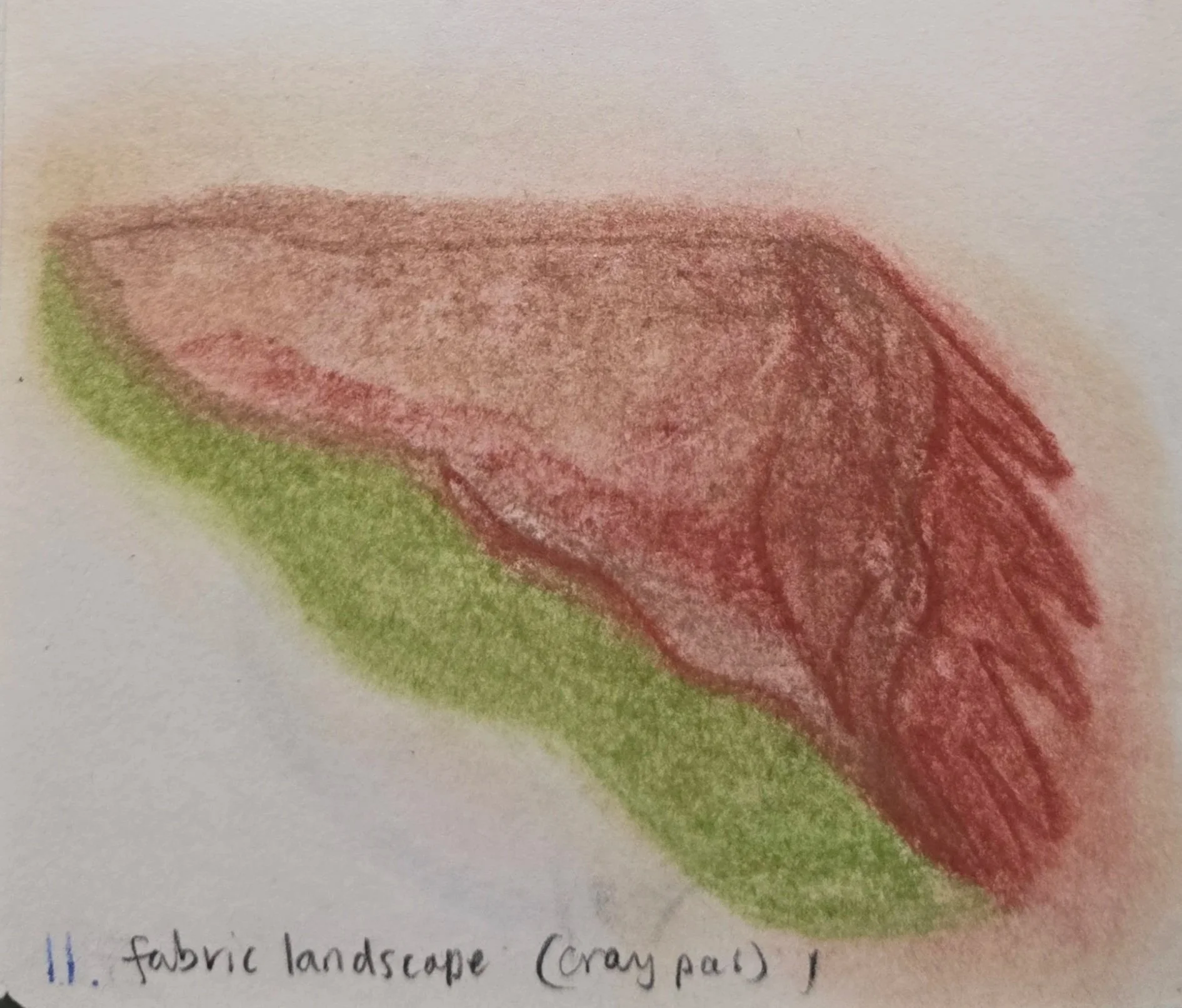
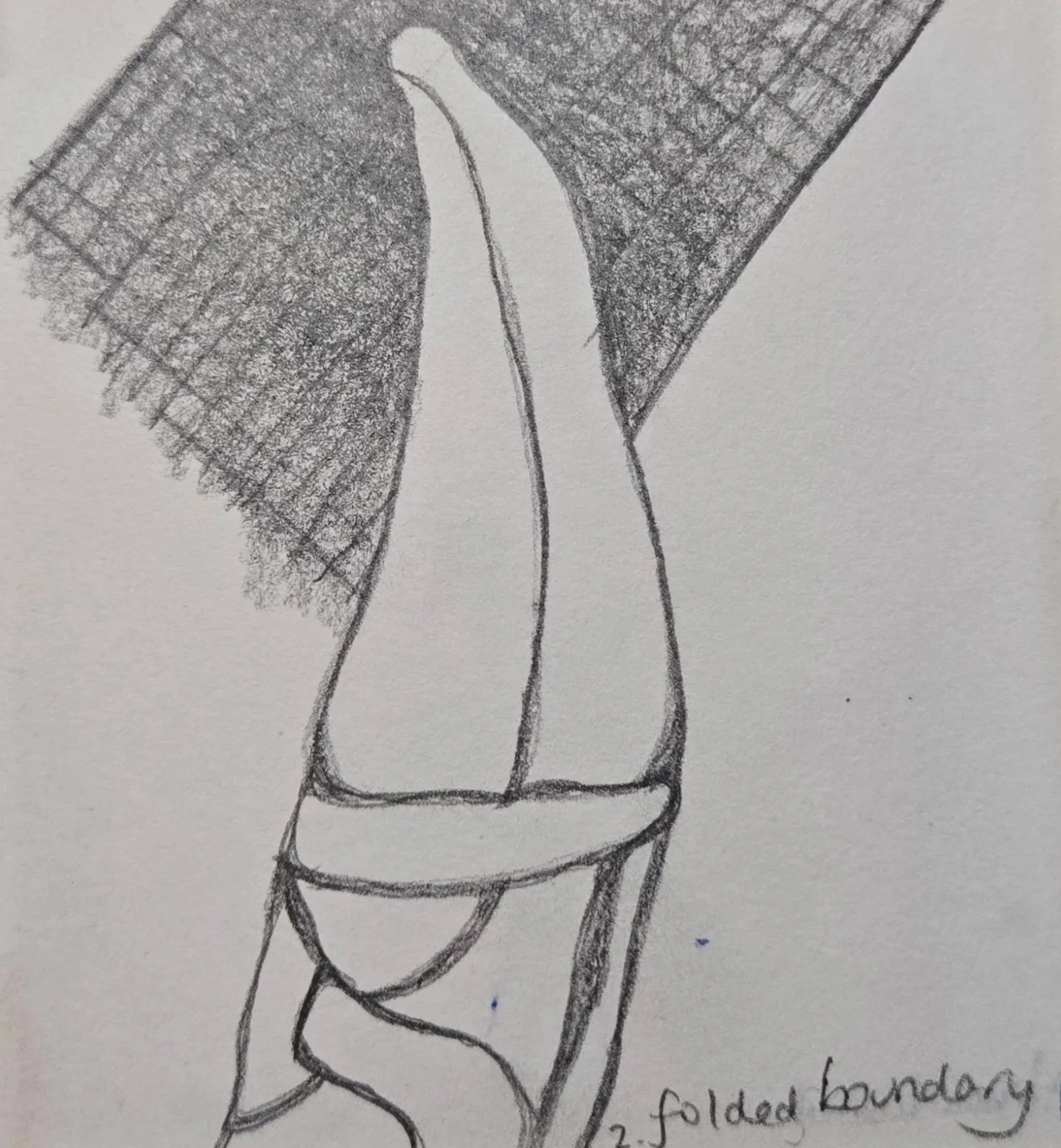
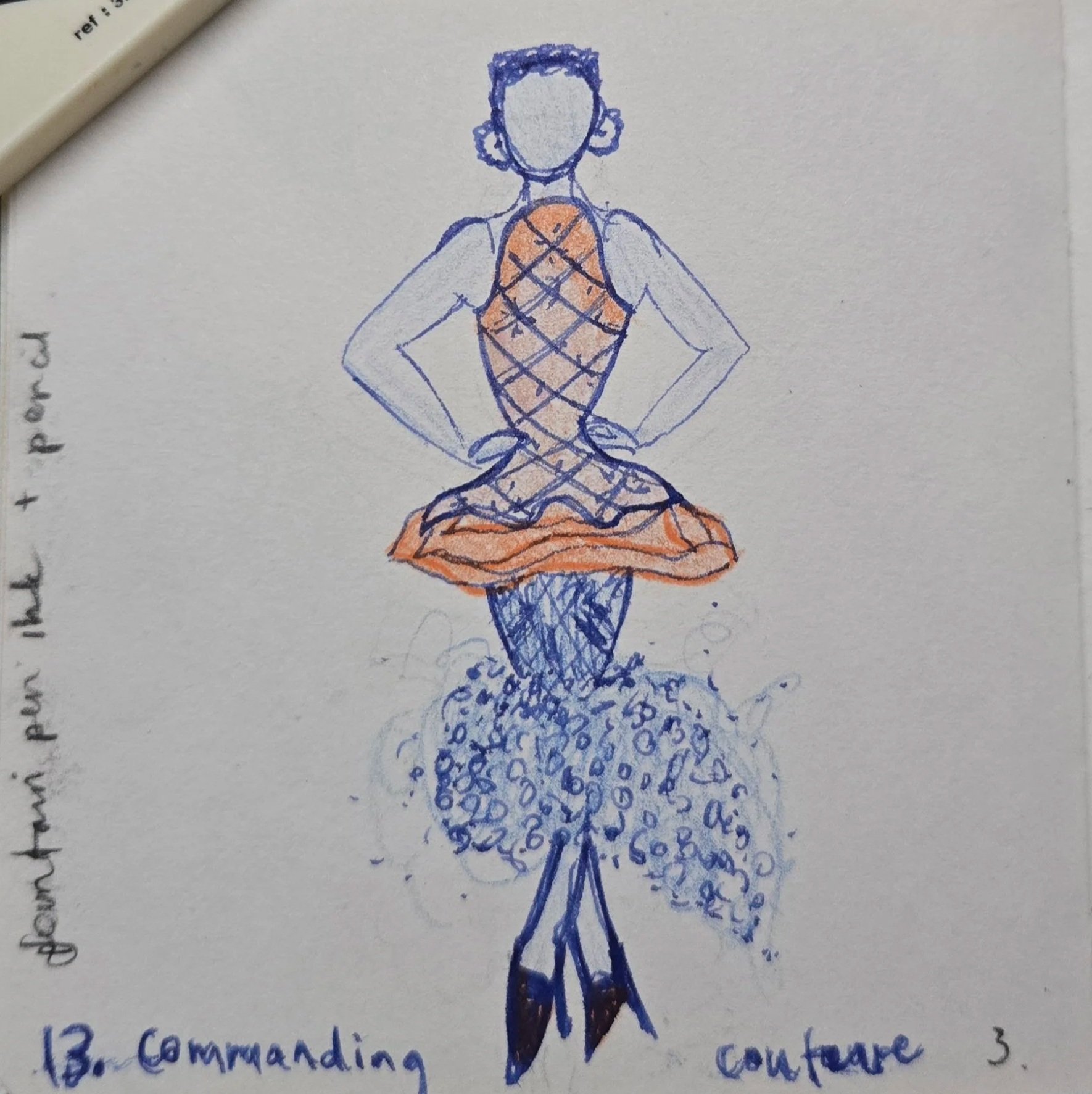
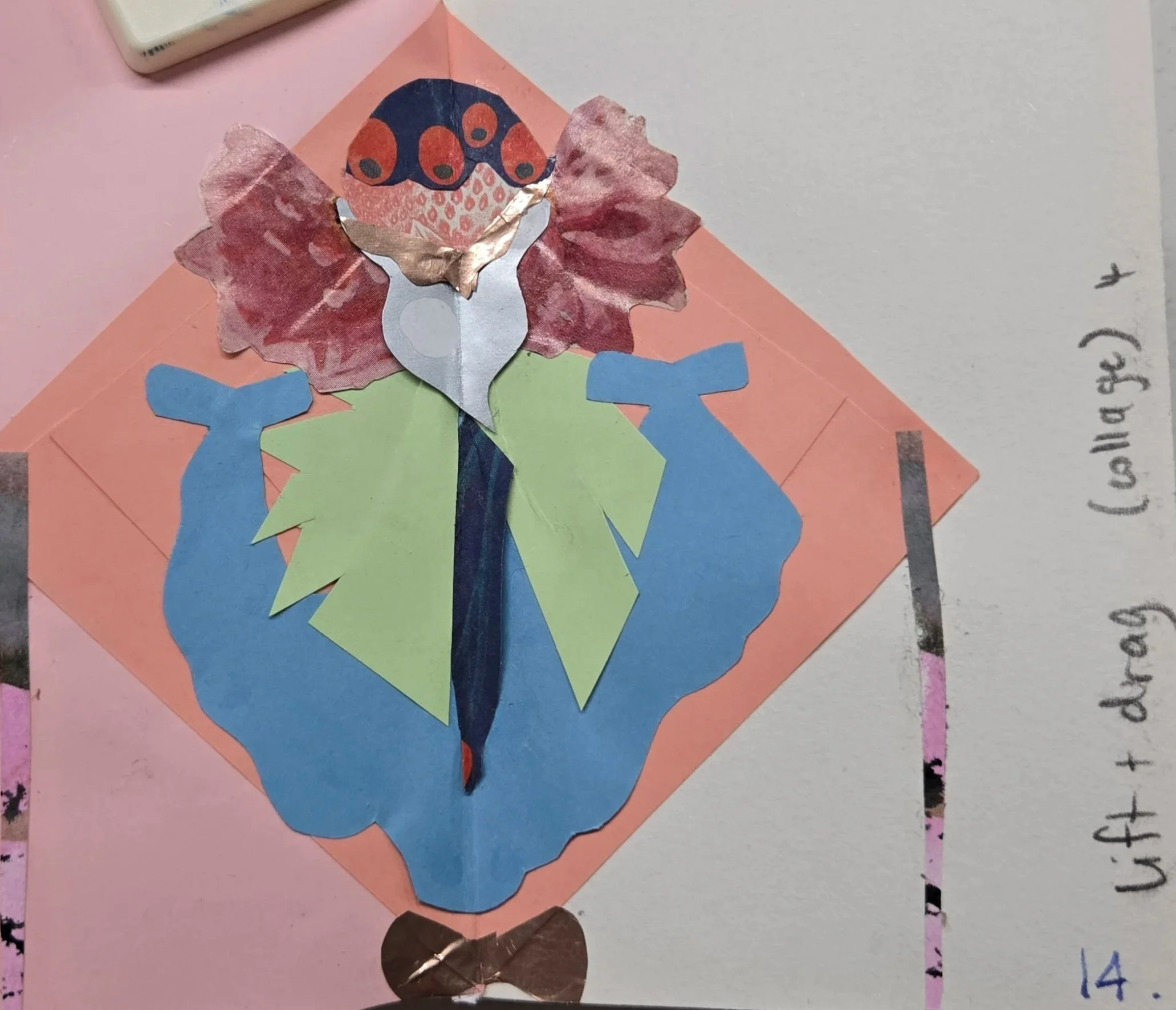
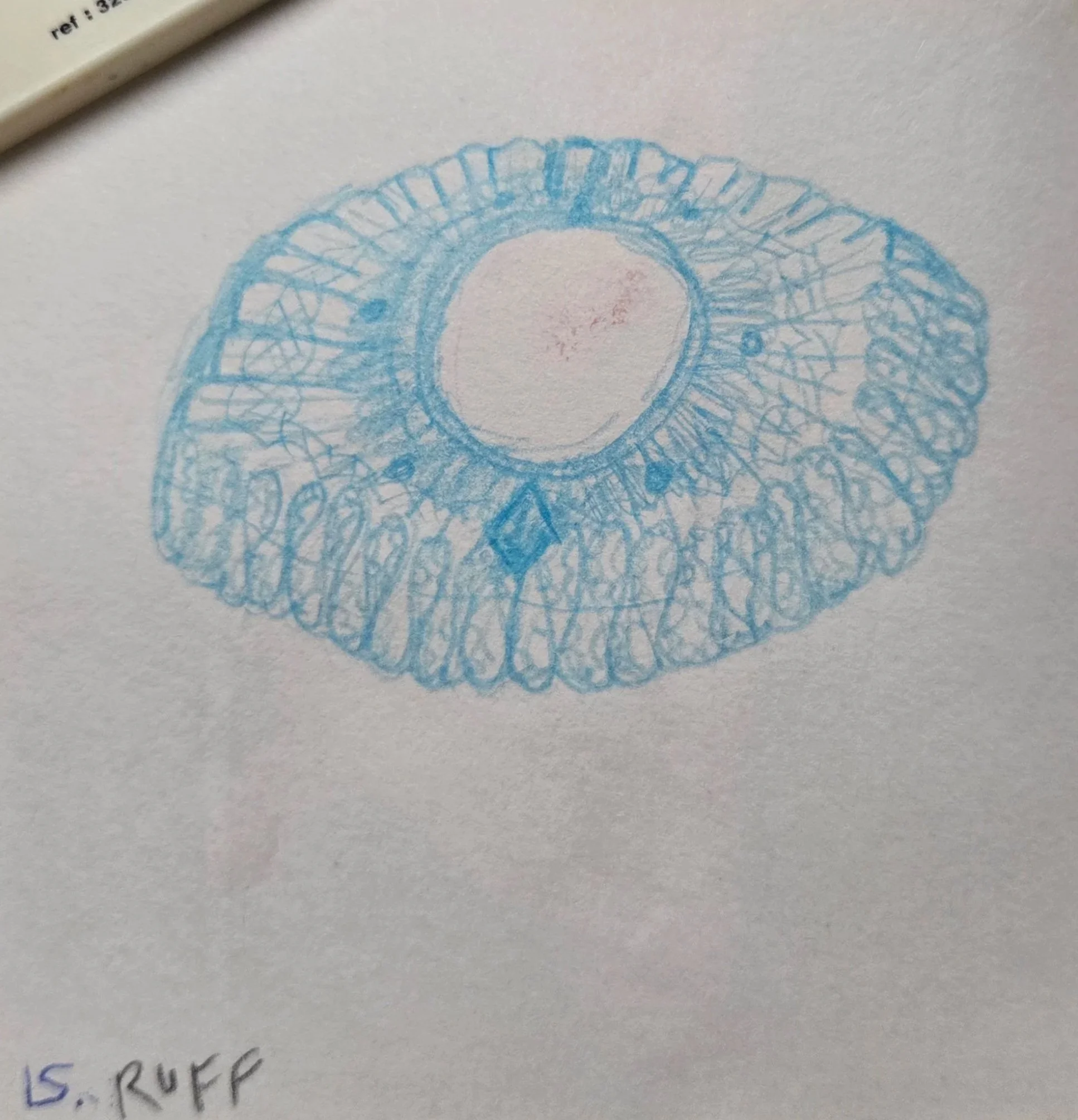
image: 5 x 5 sketchbook, thing = fabric
tolerance is still important, and so is discomfort, but this is for deciding where your energy lands.
it may help to have a starting point, & some of my go-to’s are collage, unbroken line drawings & colour blocking - changing material rather than interpretation.
some of my favourite things have been fish & grids!
5x5 creative completion prompt:
choose one thing.
make it 5 ways
stop.
🖤
current collection
fine art: digital, sculptural, small-scale, larger works
use the refined navigation tags to find exactly what you’re looking for! organised & distinct categories to match your interest, with prints soon to come!
🖤 digital
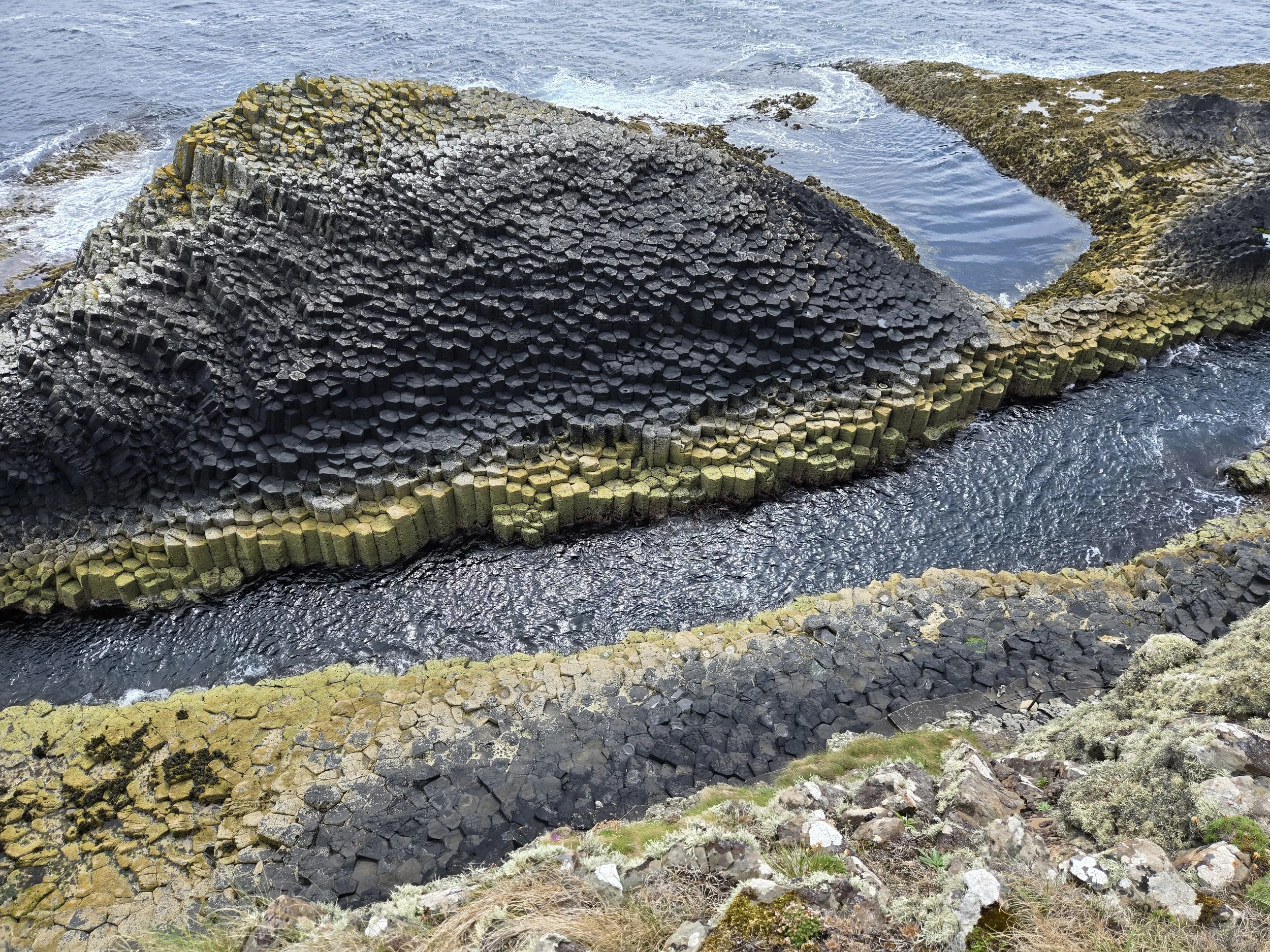
Scotland Mini Moodboard Packs by BRZA DOLL provide a new setting- through the artists’ eyes- for your own imaginative jaunt and creative frolicking fun!
You’ll receive:
✔ One curated moodboard
✔ Accessible & printable as PDF + PNG files (A4/A5)
✔ Residency reflections from the field - from the in-progress “a wee jaunt”collection
✔ Poetic cues + creative prompts
✔ A hand-selected 9-colour palette with hex codes
✔ 5+ high-resolution hero images
✔ Personal-use licence
During my self-directed artist residency in Scotland (2025), I created a series of mini moods- small visual collections designed to curate the colours, textures, atmospheres, and emotional moments of each day.
View the listing images for a sneak peek into the basalt hexagons (#3 staffa) mini mood pack.
Each pack combines my original photography, a hand-selected colour palette, and reflective notes from my travel journal. They’re designed as gentle companions for your own creative process; whether you’re sketching, journalling, collaging, writing, or simply gathering sparks for a future project.
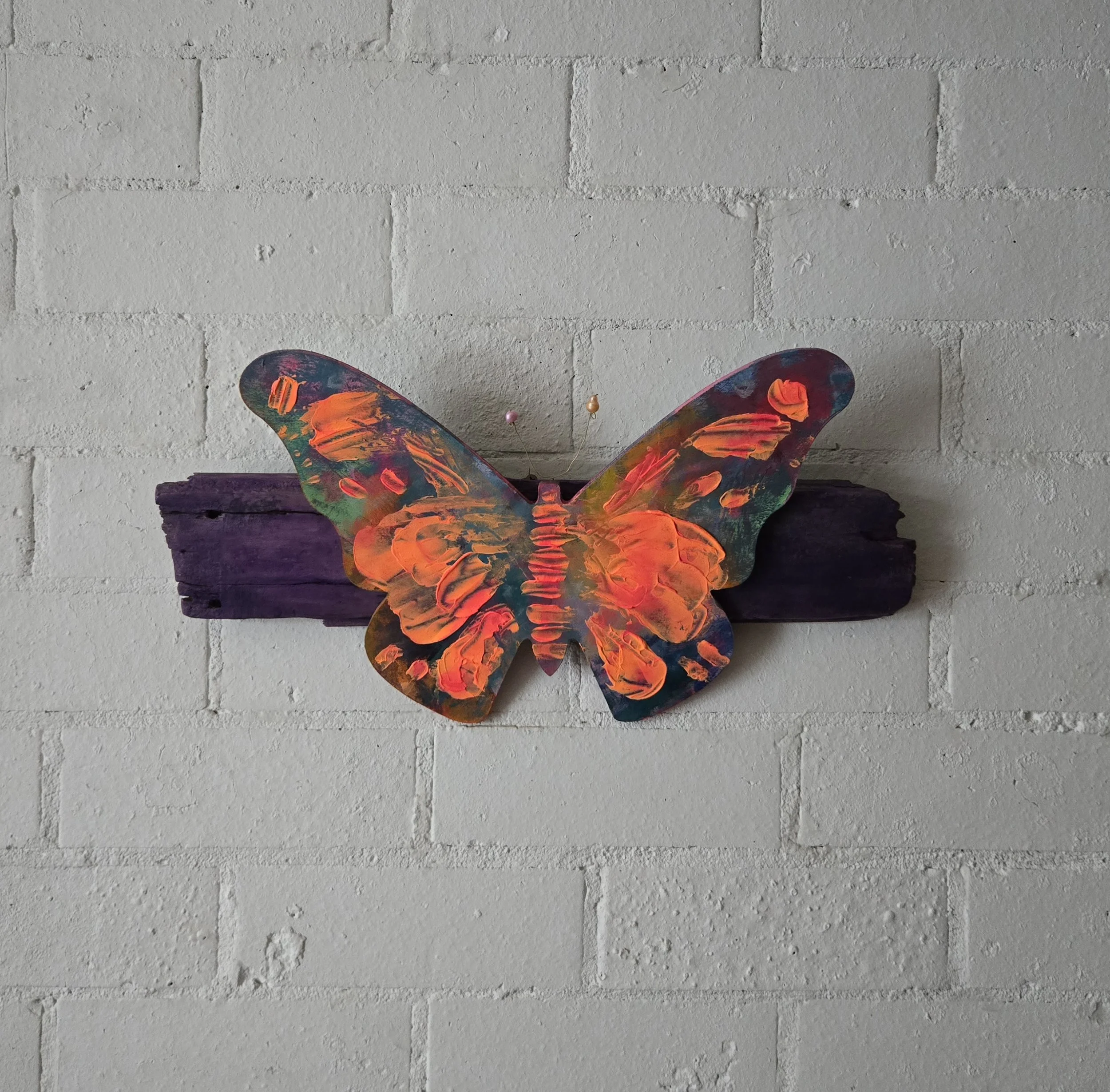
original artwork by BRZA DOLL
hand-painted & assembled mixed media piece on reclaimed wooden elements*
sculptural work, designed & ready to hang, approx: 46cm x 25cm x 2cm
this sculptural butterfly reclamation is a unique experiment from the BRZA DOLL studio; the MDF form has undergone repurposing - a metamorphosis- if you will!
it has been layered with house paint and acrylic paint, finished with a fluorescent glow- paint washed and mounted to a reclaimed 50+yo floorboard from the artists’ ongoing home restoration. it marks the beginning of a deep dive into themes of aesthetics and artistic expression in the home, historical and restorative practices and recognition of domestic crafts as fine art
* repurposed MDF signage, acrylic paint (fluoro + mixed-layered palette), house paint underlayers, reclaimed 1960s floorboard from the artist’s home, wire + beaded detail, varnished for longevity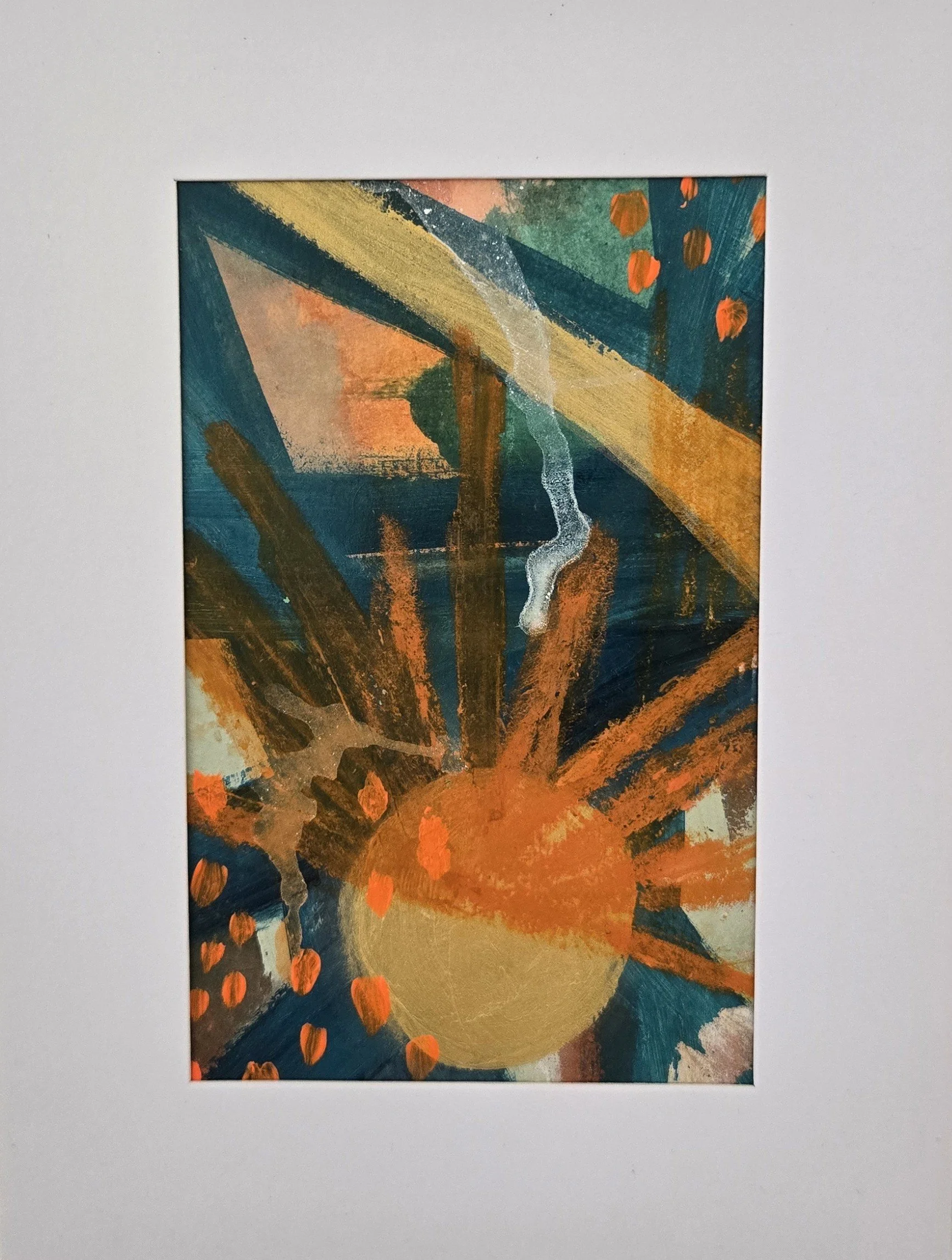
original artwork by BRZA DOLL
acrylic & oil pastel on paper (300gsm)
14.8 cm x 21 cm (A5)
presented with white matboard surround, ready to frame
here it comes captures the convergence of geometric-leaning lines with organic,swirling overlay -
the sensation of hot golden sun diffused through a steamy subtropical rainforest.
within layering and gesture, structure melts and boundaries blur - echoing the hovering humidity and lush clarity of summertime.

original artwork by BRZA DOLL
acrylic & oil pastel on repurposed canvas, mounted in floating timber frame
72.5 × 101 × 3 cm (including frame) · ready to hang
gumnut bebe is a vivid abstraction of layered memory & experience. painted on a rescued mass-produced canvas, the surface holds traces of another life beneath the surface
the piece quietly asks for pause and recall - listening to echoes of joyous moments and embracing the ache of endings
sign up to the newsletter to keep up-to-date with shop releases and behind-the-scenes goodies.
🖤
monthly GLAM curation
what do onions, art and horsehair plaster have in common?
while my artmaking has been exploring layers, I realised our home restoration process is echoing the questions coming up in my creative practice. this volume began with references of onion-like layers, but perhaps a more hand-crafted metaphor was available to me the whole time- horsehair plaster being a suprisingly more relevant concept to me!
I haven’t shared too much from the restoration/renovation process, as it is a big one, and progress is expectedly slow. these pause-points are actually where I started to map the similarities between the things that I find satisfying and fulfilling in artmaking, as with home renovations. the realisation that the tensions and unease are actually worth listening to, unpacking or sitting with until they are less provocative & panic-inducing.
in the meantime, as with my studio work, there have been completion-focused side-quests for me to channel the frenetic energy that patience often elicits.
my major restoration side-quests have included:
experimenting with interior design & sourcing all manner of materials, fixtures and finishes
moodboarding my dreams, then trying to fit them into a very tight budget
learning the councils LEP (Local Environment Plan)
and RESEARCH. just… so. much. research.
the research was necessary from the beginning, as we purchased what is estimated to be a home built inapprox. 1910. as such, it is also locally heritage listed, which is a deterrent for people who don’t look for ways to actively make their own lives harder.
I, however, am apparently NOT that type of person, and thus, have heritage-preserving recommendations to consider
of course, I am joking, but the significant lack of knowledge in areas of building, construction, trade, site management & architecture combined with the need to judge the preservation possibilities of most aspects of the dwelling, are much further outside of my scope than artmaking.
though, in saying that, there ARE certain similarities.
my obsession with arts, crafts & creative practices date back further than my own memory spans. I am discovery, through this respect for craft traditions, elements of material research that are relevant to my practice, & the way restoration also has me questioning more than just historically-appropriate colour schemes.
the realisation for expansion & questioning around a heritage-focused, (often colonial) narrative has also revealed itself, & it is very significant in the way we approach decisions (new to us) about existing structures (often entrenched, but not always permanent).
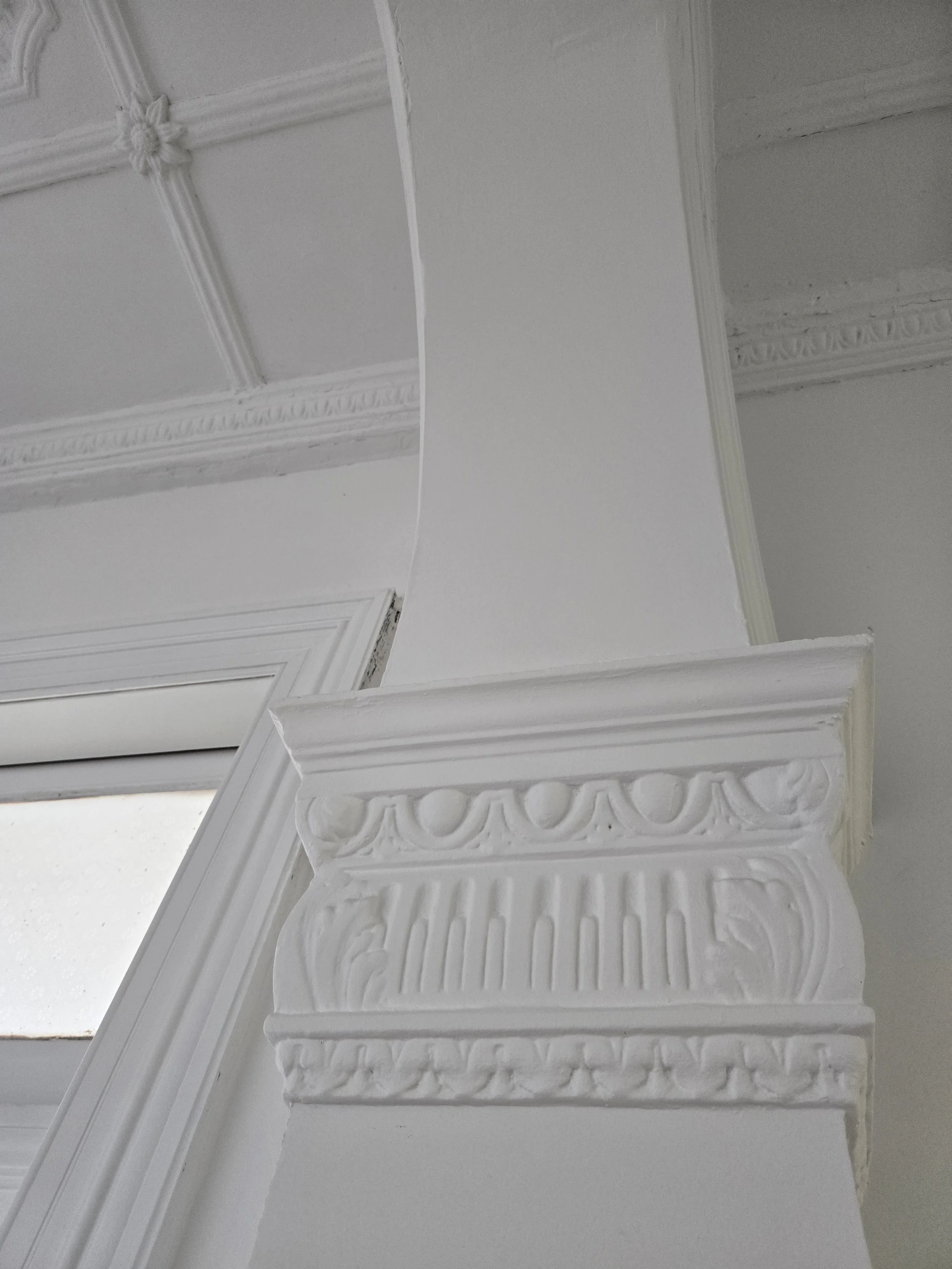
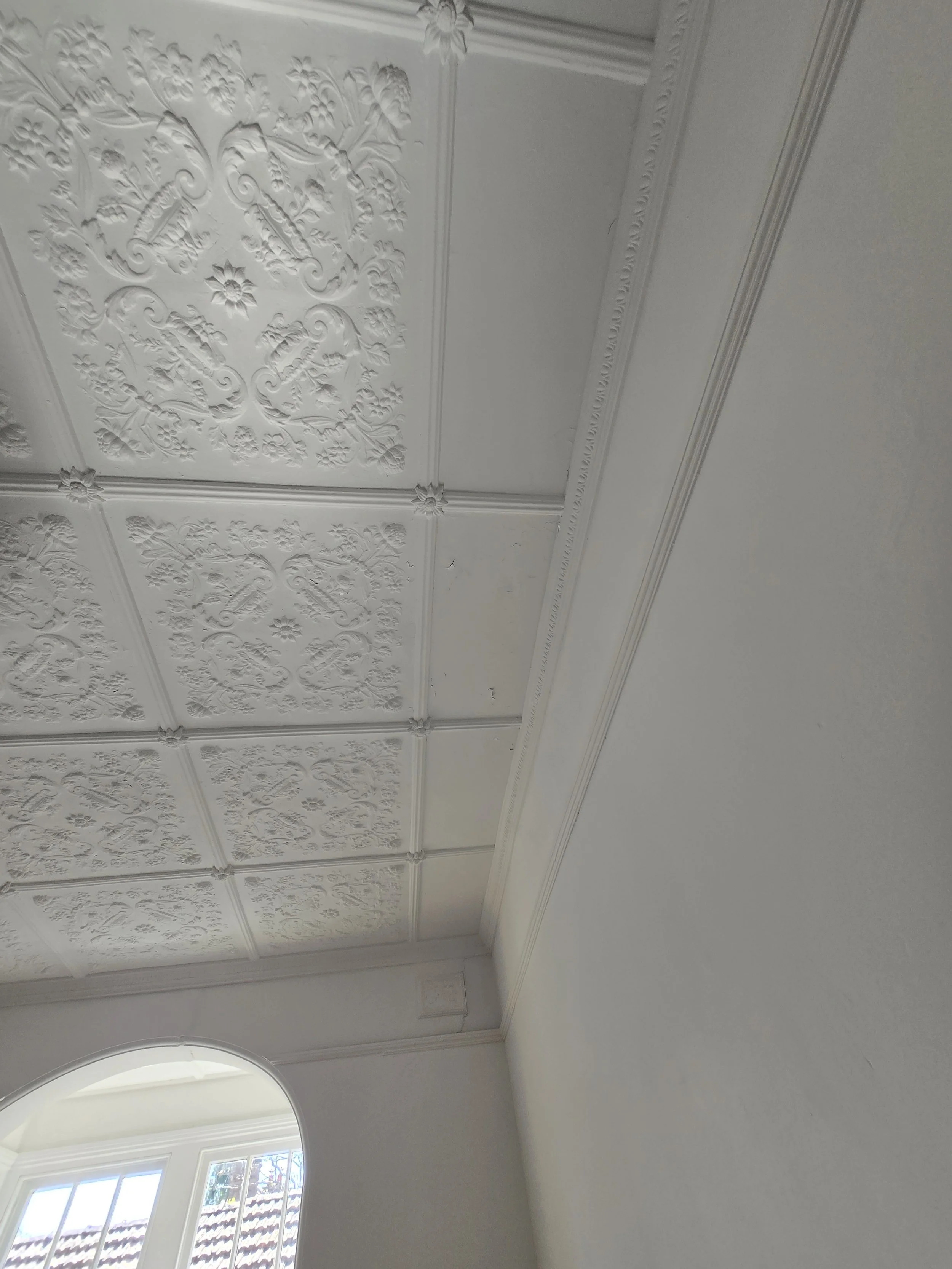
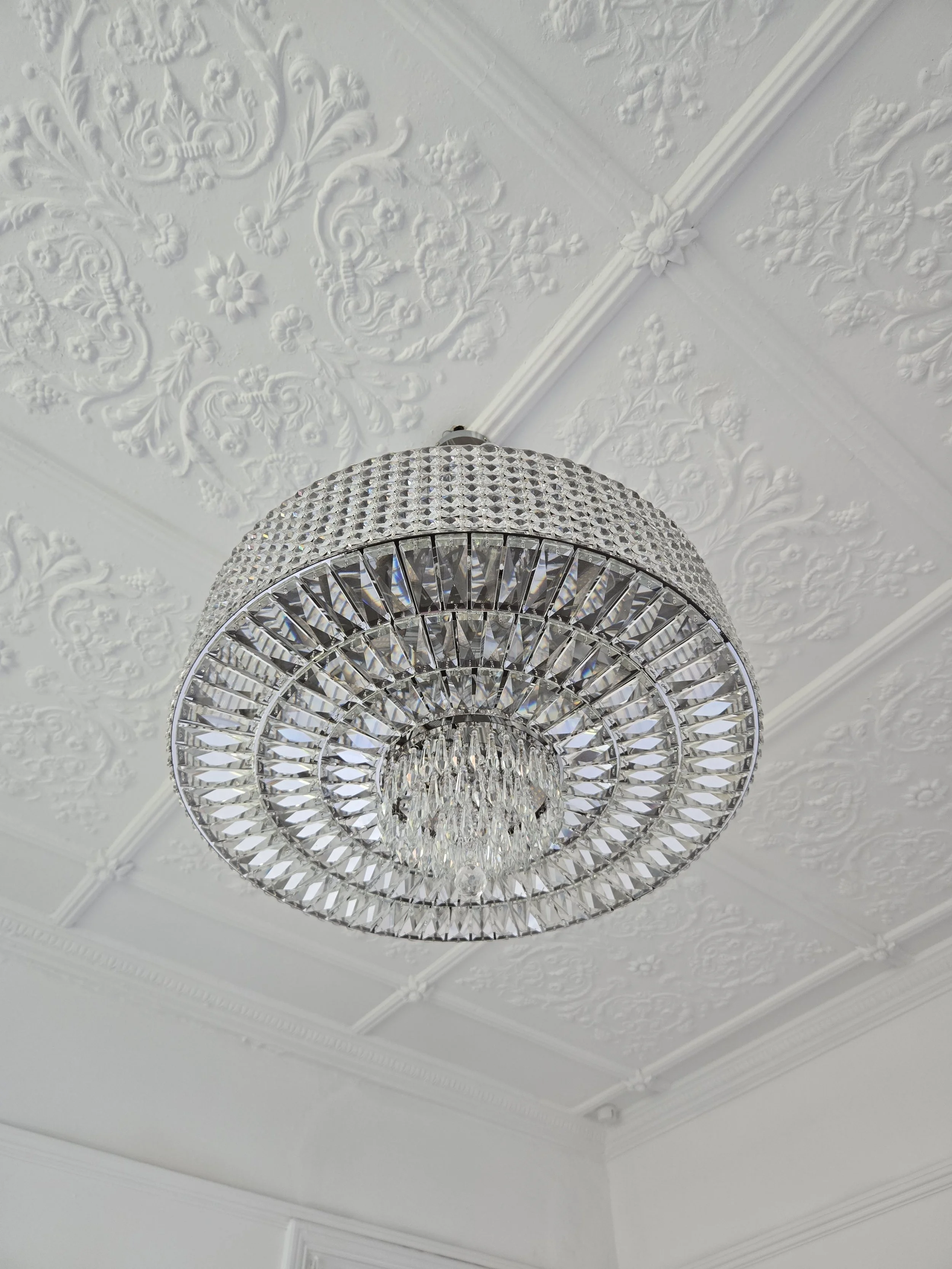
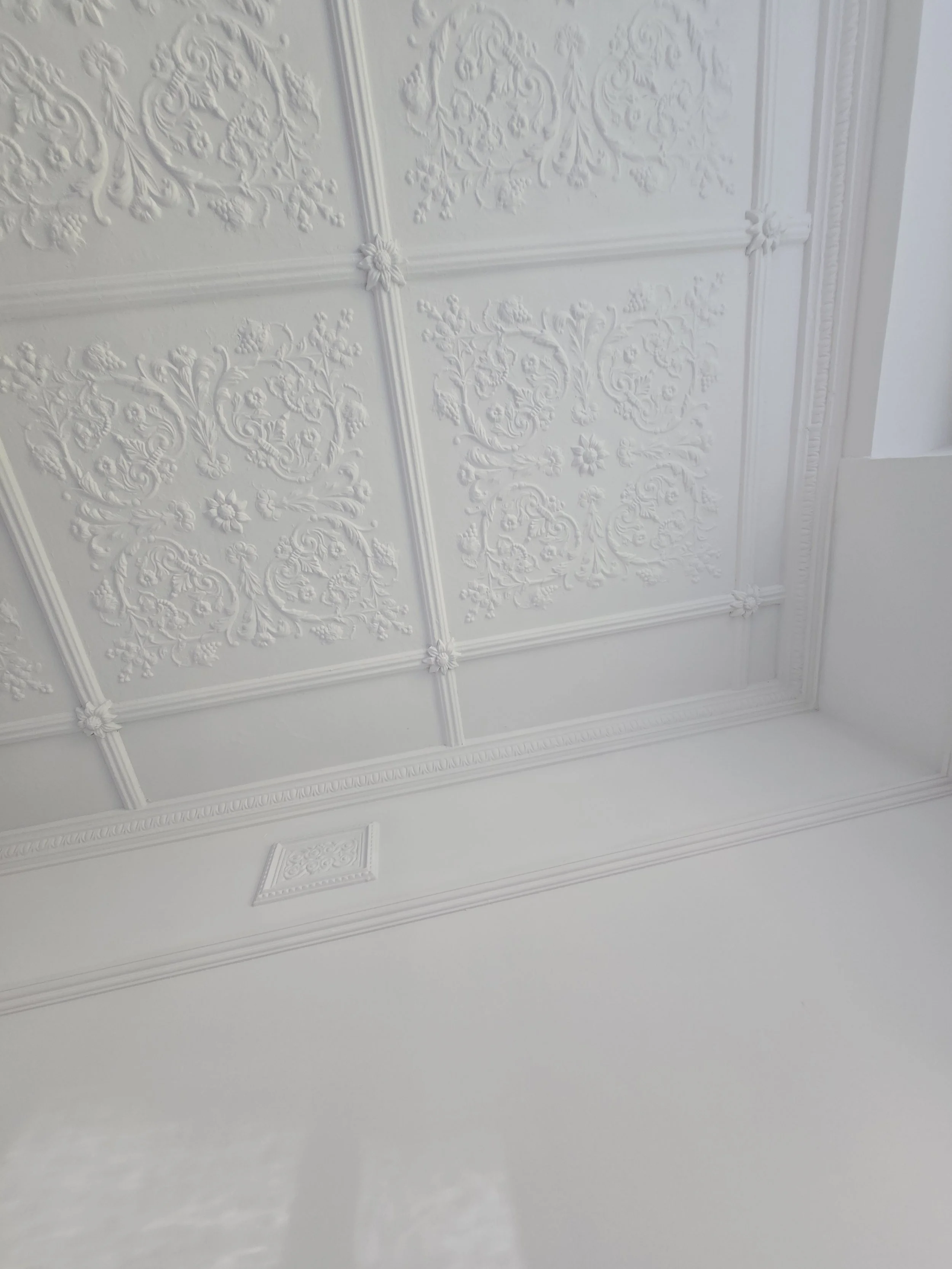
images: original plaster moulding- hallway column & x2 motifs
from my research I’ve gathered that horseshair was collected in the grooming process to be added as a binder to traditional, lime-based house plaster. horehair being useful because it is (apparently) flexible, manipulable, sound-dampening & allowed for greater temperature control / safety (compared to the much more flammable; modern drywall).
there is also a certain amount of charm in a hand-mixed & applied resource. especially, to me, when considering history and the mark of the artisans hand. what is also compelling to me is the handprint of a mixture of bygone eras. the marks of construction are evident from early 1800’s (Victorian) influences to pre-war, post-war and even minor modern adjustments.
in recognising the ceilings to be original horsehair plaster (confirmed by our heritage ceiling assessors), I was immediately enthralled with the idea of discovering the ENTIRE HISTORY of each pattern.
it was also through this assessment that we discovered that there are a few quirks about our ceilings (because of course there are!), including the most notable and noticeable- each room has a different decorative design moulded into the medallions, roses & cornices.
after several online hours of searching through plaster ceiling catalogues from the late 1800’s, early 1900’s, (and with additional ceiling-guy confirmation), i realised that without visiting a domestic archive (such as the Caroline Simpson Library in Sydney) in person, the liklihood of finding ‘exact matches’ would be low.
some useful resources if you’re on a horsehair plaster ceiling journey as part of your art/life practice, too:
Decorative Plasterwork in New South Wales, 1 800- 1939; article by Joanna Capon (AUSTRALASIAN HISTORICAL ARCHAEOLOGY, 1 1, 1993)
George Taylor’s improved fibrous plaster; article by Michael Lech (MHNSW)
image: multi-image collage provided to ceiling assessors. original moulded horsehair plaster ceilings
we recognised that the decorative motifs could have also been socio-cultural indicators, or simply put; each design acts like a symbol to suggest what the room was used for!
room: hallway (front/rear)
motif: geometric (quatrefoil) floral design
symbolism: overall frame for the interior, most demure ornamentation for a thoroughfare
room: front left (originally main bed / drawing room)*
motif: rococo-style garlands with a central rosette cluster
symbolism: fancy florals for the boudoir!
room: front right (originally parlour)
motif: grapevine, scrolls, leaves
symbolism: aligning with the god of wine himself- Dionysus/Bacchus, the grapevine is a classic symbol of hospitality & welcoming, with food, drink & merriment
room: kitchen (originally kitchen and/or dining room)
motif: sheaves of wheat, winding stalks, grains
symbolism: grains for nourishment! this room had several layers of history to it- with x2 separate asbestos tile layers (professionally removed on day dot), it was recently, functionally, a kitchen. however, depending on the wealth of early occupants, this may have been a formal dining room with a separate hearth and scullery (now long gone) through a rear/side doorway.
room: back left (originally main living area / sitting room)
motif: waratah, florals and possibly a vase or vessel in scrollwork
symbolism: signifying identity through the iconic Australian flora and prominence in the largest room. Surprisingly similar to this panel I found in my research.
*note: these suggested original room uses are our best guess, as we
haven’t uncovered significant written record of our house (as yet).
in the near future i plan to visit all manner of archives for all manner of art & life projects, because my brain craves connections, through layers of hard work, patience & long-term payoffs-the echoes of a wider, known-history make our plans for an in-home studio worth the wait!
(yes, it will be the grapevine room!)
🖤
BRZA DOLL
